

Table of Contents
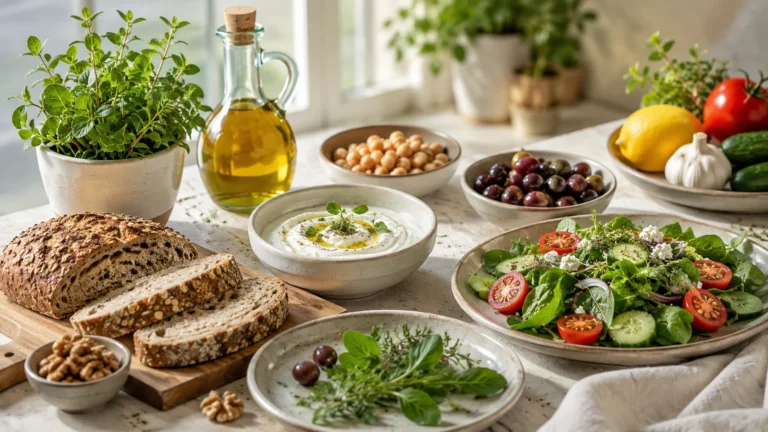
To customize the Mediterranean diet, keep the foundation steady and adjust the details. The foundation is vegetables, beans, lentils, fruit, whole grains, nuts, seeds, herbs, seafood, fermented dairy, and extra virgin olive oil. The details are your schedule, budget, culture, cooking skill, appetite, and medical goals. The Traditional lifestyle of Mediterranean basin communities was never one fixed menu. A fisherman in Crete, a shepherd in Sardinia, and a market cook in Lebanon used different foods, yet the same pattern: plants first, olive oil often, fish when available, meat sparingly, and meals eaten without rushing.
Use Mediterranean Healthy Living as a practical recipe reference when you want Mediterranean meals that feel realistic, not staged. The best approach is not copying another country’s plate. It is building your own plate with the same nutritional logic.
How to Customize the Mediterranean Diet Without Losing the Core Benefits
Start with a simple plate formula. Fill half your plate with non-starchy vegetables, one quarter with protein, and one quarter with whole grains or starchy vegetables. Add 1 tablespoon extra virgin olive oil or 2 tablespoons nuts or seeds.
For lunch, use 1 cup chopped cucumber, 1 cup tomatoes, ½ cup cooked chickpeas, ½ cup bulgur, 2 tablespoons parsley, 1 tablespoon olive oil, lemon juice, and grilled fish or boiled eggs. For dinner, try 1 cup lentil stew, 1 cup roasted eggplant and zucchini, ½ cup brown rice, and plain yogurt with garlic.
This structure supports Heart-healthy meal preparation plans because it controls portions while keeping meals satisfying.
Pick the Right Olive Oil and Use It Correctly
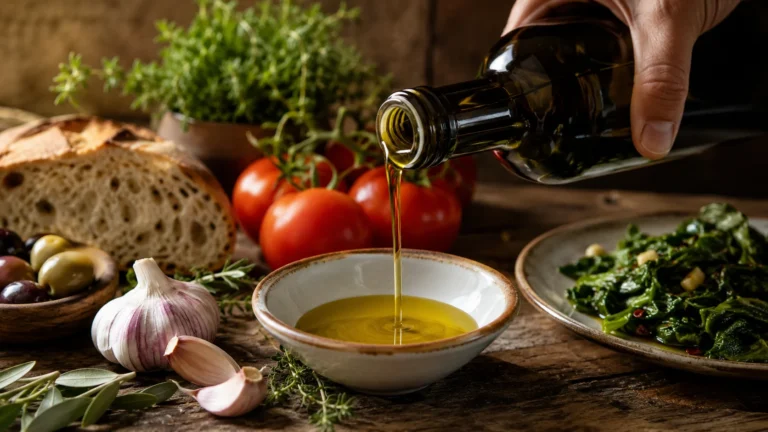
Extra virgin olive oil is the top grade because it is made mechanically, without chemical refining, and has low acidity when properly produced. Look for dark glass, tins, harvest dates, and words like extra virgin, cold extracted, or first cold pressed. Good oil smells grassy, fruity, peppery, or lightly bitter. A flat, greasy, crayon-like smell usually means poor storage or age.
Cold-pressed olive oil wellness comes from oleic acid, a monounsaturated fat, plus polyphenols that help protect fats in the bloodstream from oxidative stress. Use 1 tablespoon for sautéing spinach, Swiss chard, or okra. Use another teaspoon over lentil soup, grilled sardines, or tomato salad after cooking. These are Protective monounsaturated fat recipes, not decoration.
Match the Diet to Your Workday
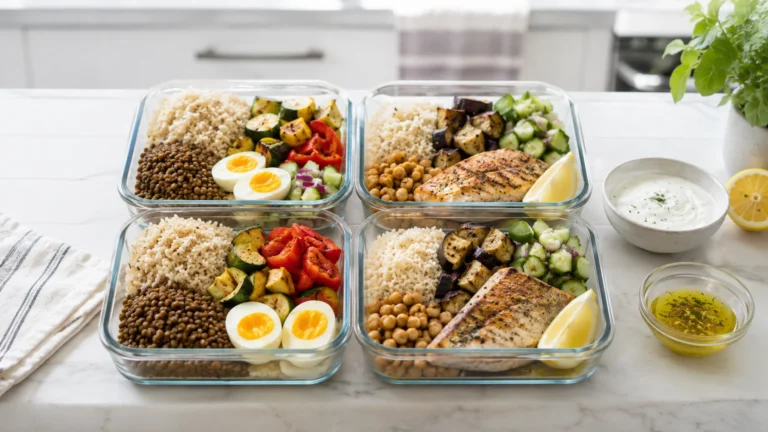
If mornings are rushed, prepare overnight oats with ½ cup rolled oats, ¾ cup Greek yogurt, ½ cup berries, 1 tablespoon chia seeds, and cinnamon. If you work long shifts, pack a box with 1 boiled egg, ½ cup hummus, carrot sticks, cucumber, olives, and whole grain pita.
For family dinners, batch cook 2 cups dry lentils, 2 cups brown rice, and a tray of vegetables: red onion, bell pepper, cauliflower, carrot, and zucchini. Season with cumin, oregano, garlic, black pepper, and lemon. Store in glass containers for three days.
Adjust for Metabolic Health
For weight control, measure fats instead of pouring freely. Olive oil is healthy, but 1 tablespoon still provides about 120 calories. Keep grains to ½ cup cooked per meal if weight loss is the goal. Increase vegetables to 2 cups.
For blood sugar control, avoid naked carbohydrates. Pair rice, bread, potatoes, or pasta with protein, fiber, and fat. A better plate is ½ cup barley, ¾ cup lentils, 1 cup roasted vegetables, 1 tablespoon olive oil, and tuna. This improves Dietary fiber gut health and slows glucose rise after meals.
For cholesterol support, use beans four times weekly, fish twice weekly, oats three times weekly, and nuts in measured portions. This pattern is linked with Cardiovascular event risk reduction when it replaces processed meat, butter, refined snacks, and sugary drinks.
Build Omega-3 Meals That Fit Your Budget
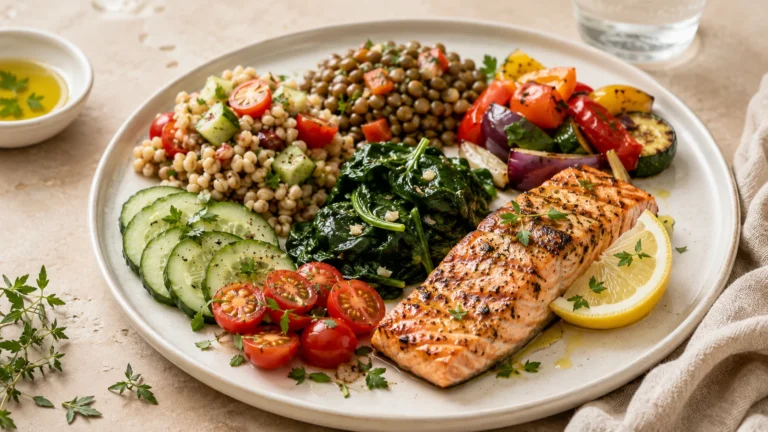
Marine-derived omega-3 fat sources include sardines, mackerel, salmon, anchovies, trout, and herring. Canned sardines are often the most affordable. Mash one can with lemon juice, chopped onion, parsley, black pepper, and 1 teaspoon olive oil. Serve over toast or cucumber slices.
If you do not eat fish, use walnuts, chia, flax, and algae-based omega-3 options. They are useful, but seafood provides EPA and DHA directly.
Adapt It to Local Food Culture
Whole-food nutrition principles work in South Asian, Middle Eastern, American, and European kitchens. In Bangladesh, a Mediterranean-style meal can be rice, dal, sautéed leafy greens, cucumber salad, small fish, and plain yogurt. Use mustard oil or olive oil carefully, keep fried items occasional, and double the vegetables.
In a busy American kitchen, it may be turkey bean soup, farro salad, roasted broccoli, and fruit. In a vegetarian home, use chickpeas, lentils, tofu, eggs, yogurt, sesame, walnuts, and mushrooms.
Use Food to Control Inflammation Daily
Chronic cellular inflammation control needs repetition. Eat five plant colors most days: tomato, spinach, carrot, purple cabbage, and berries. Add herbs generously. Use ½ cup parsley, mint, basil, or dill in salads instead of a tiny garnish.
Blue Zone aging secrets are not mysterious. They include beans, greens, walking, social meals, modest portions, and low reliance on processed foods. The Mediterranean pattern fits because it makes healthy defaults easy. Cook simple food, measure rich ingredients, season boldly, and keep the plate mostly plants.
Keep water on the table, fruit within sight, and roasted vegetables ready before hunger hits. Environment shapes consistency more than motivation, especially during exams, night shifts, deadlines, family routines, travel days, and stressful weeks.
Explore more practical recipes here: Mediterranean Healthy Living
Join the food and wellness community here: Mediterranean Healthy Living on Instagram
FAQs
- Can I customize the Mediterranean diet if I do not like fish?
Yes. Use eggs, Greek yogurt, lentils, chickpeas, tofu, walnuts, chia seeds, flaxseed, and algae-based omega-3 options. Fish is helpful, but the diet can still work when built around plants, legumes, healthy fats, and minimally processed foods. - How much olive oil should I use daily?
Most people can start with 1 to 2 tablespoons daily, depending on calorie needs. Measure it with a spoon instead of pouring freely. Use it for vegetables, beans, salads, soups, and fish. - Is the Mediterranean diet good for heart health?
Yes. It focuses on vegetables, fruits, whole grains, beans, nuts, fish, and olive oil while limiting red meat and added sugar. The Mayo Clinic guide to the Mediterranean diet for heart health explains these core heart-supportive food patterns. (Mayo Clinic) - Can this diet help with inflammation?
It may support lower inflammation because it includes fiber, omega-3 fats, olive oil polyphenols, herbs, vegetables, and antioxidant-rich fruits. The NIH research review on the Mediterranean diet and inflammation discusses anti-inflammatory mechanisms linked with this eating pattern. (PMC) - Can I follow the Mediterranean diet with rice?
Yes. Use rice in controlled portions, usually ½ cup cooked per meal. Pair it with dal, fish, yogurt, leafy greens, cucumber, tomatoes, or beans to improve balance. - What is the easiest Mediterranean breakfast?
Try ¾ cup Greek yogurt with ½ cup berries, 1 tablespoon walnuts, 1 tablespoon oats, and cinnamon. It gives protein, fiber, healthy fat, and natural sweetness. - Can vegetarians follow this diet properly?
Yes. On busy nights, a bowl of lentils, cucumber, tomato, yogurt, and warm rice can still follow the Mediterranean pattern. Add vitamin B12 and omega-3 planning when needed. - Is pasta allowed in the Mediterranean diet?
Yes. Keep portions moderate. Use 1 cup cooked whole-grain pasta with tomato sauce, spinach, mushrooms, olive oil, tuna, chickpeas, or grilled vegetables. - How can I meal prep Mediterranean food for a busy week?
Cook one grain, one legume, one protein, and two trays of vegetables. Store sauces separately. Use lemon, yogurt, herbs, garlic, olive oil, and vinegar to change the flavour. - What should I avoid most often?
Limit processed meat, deep-fried snacks, sugary drinks, packaged desserts, refined grains, and oversized portions of cheese, butter, and cream-based sauces.