

A balanced diet with Mediterranean foods is not a strict meal plan or a list of forbidden ingredients. It is a flexible way to build meals around vegetables, fruits, whole grains, beans, lentils, herbs, olive oil, nuts, seeds, fish, seafood, and moderate portions of dairy, eggs, and poultry. Red meat, sweets, and highly processed foods can still appear occasionally, but they do not anchor the plate.
The easiest starting point is balance: fill most of your meals with colorful plant foods, add satisfying protein, choose a whole-food carbohydrate, and use flavorful fats in small but meaningful amounts. This article is for general education and everyday meal planning. If you have a medical condition, food allergy, eating disorder history, or nutrition prescription, ask a qualified health professional for personalized guidance.
How a Balanced Diet with Mediterranean Foods Works
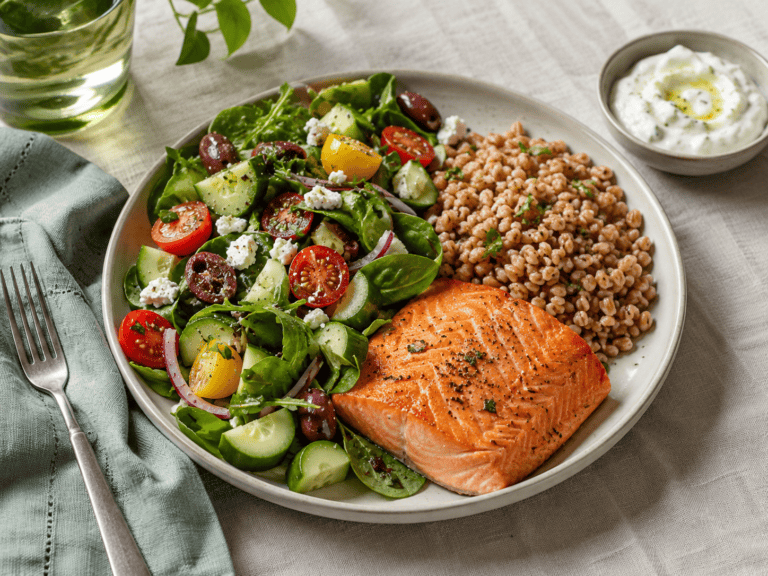
Think of the Mediterranean pattern as a plate method, not a diet rulebook. A practical meal can include half a plate of non-starchy vegetables or fruit, one quarter whole grains or starchy vegetables, and one quarter protein. Then add olive oil, avocado, nuts, seeds, tahini, olives, or yogurt-based sauces for flavor and staying power.
This structure works because it helps you combine fiber, protein, fat, and fluid-rich foods in one meal. A bowl of lentils, farro, cucumbers, tomatoes, herbs, feta, and olive oil is more balanced than a plain bowl of pasta, but it is still simple and comforting.
Start with Plant-Rich Foods
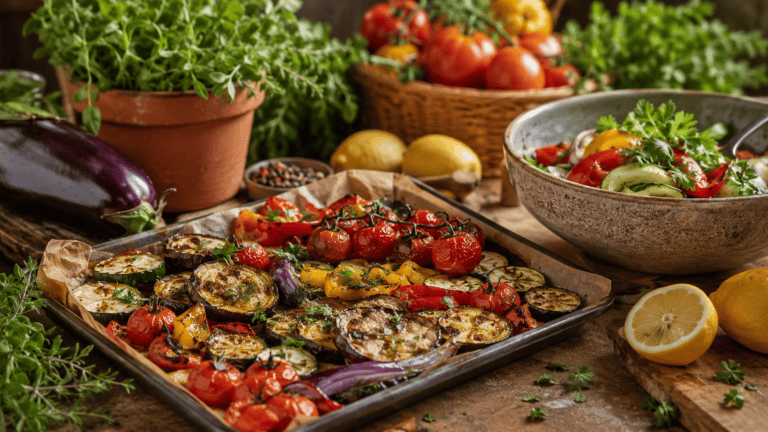
Vegetables and fruits are the heart of Mediterranean eating. Instead of treating vegetables as a side dish, build meals around them. Use roasted eggplant, zucchini, peppers, carrots, tomatoes, greens, onions, herbs, citrus, figs, berries, apples, or pomegranate seeds to bring color and variety.
Aim for different textures across the week: crisp salads, silky dips, roasted vegetables, soups, stews, and fresh fruit. Frozen vegetables, canned tomatoes, jarred roasted peppers, and canned artichokes can make this easier on busy nights. Rinse canned vegetables or beans when you want to reduce sodium.
Choose Carbohydrates That Satisfy
Mediterranean meals often include bread, rice, pasta, potatoes, bulgur, couscous, barley, oats, or farro. The key is choosing carbohydrates that support the rest of the meal instead of crowding it out.
Try whole grain pita with hummus and chopped salad, barley in vegetable soup, oats with walnuts and fruit, or roasted potatoes with fish and greens. If you enjoy white rice or traditional pasta, keep the portion moderate and pair it with vegetables, legumes, lean protein, and olive oil.
Add Protein from Beans, Seafood, Yogurt, Eggs, and Poultry
A Mediterranean kitchen uses protein variety. Beans, chickpeas, lentils, split peas, nuts, and seeds are budget-friendly staples that bring fiber and minerals along with protein. Make them easy by keeping cooked lentils, canned chickpeas, or white beans ready for salads, soups, and grain bowls.
Fish and seafood fit naturally into this pattern, especially sardines, salmon, trout, tuna, mussels, shrimp, or cod. Poultry, eggs, plain Greek yogurt, kefir, and modest portions of cheese can round out meals. Red meat can be enjoyed less often and in smaller portions, especially in dishes where vegetables and legumes share the spotlight.
Use Healthy Fats for Flavor
The Mediterranean way feels sustainable because it celebrates food. Herbs, spices, garlic, onions, citrus, vinegar, tomato paste, pomegranate molasses, capers, and fresh greens can make simple ingrediOlive oil is the signature fat in many Mediterranean dishes, but balance still matters. Use it to sauté vegetables, dress salads, finish soups, or enrich bean dishes. Nuts, seeds, olives, avocado, and tahini also add satisfying fat and texture.
A little fat can make vegetables more enjoyable and help a meal feel complete. Try olive oil with lemon and oregano, tahini with garlic and water, yogurt with cucumber and mint, or walnuts over cooked greens. ents taste layered and bright.
Build Meals Around Flavor, Not Restriction
The Mediterranean way feels sustainable because it celebrates food. Herbs, spices, garlic, onions, citrus, vinegar, tomato paste, pomegranate molasses, capers, and fresh greens can make simple ingredients taste layered and bright.
What a Balanced Mediterranean Day Can Look Like
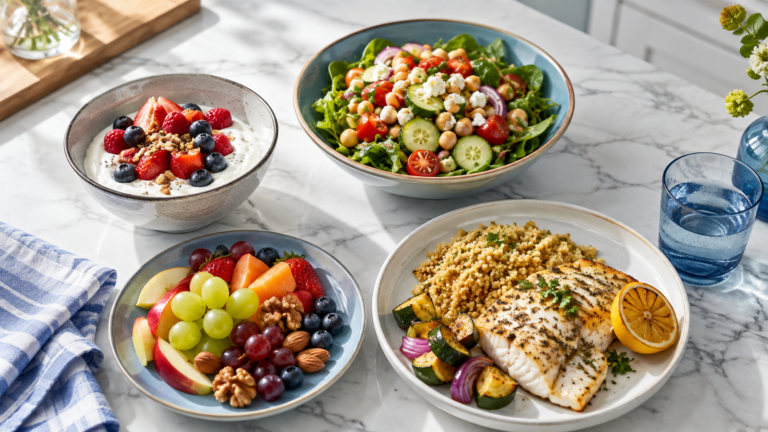
Breakfast might be Greek yogurt with berries, walnuts, cinnamon, and a drizzle of honey, or eggs with spinach, tomatoes, and whole grain toast. Lunch could be a chickpea salad with cucumbers, herbs, olives, feta, olive oil, and whole grain pita.
Dinner can be baked fish with roasted vegetables and herbed potatoes, lentil soup with salad, or chicken kebabs with rice, tomato-cucumber salad, and yogurt sauce. Snacks can be fruit, nuts, hummus with vegetables, leftover soup, or a small piece of cheese with whole grain crackers.
Make Balance Fit Real Life
A balanced diet is built over days and weeks, not one perfect meal. If dinner is pizza, add a salad and enjoy fruit later. If breakfast is rushed, pack nuts and a piece of fruit. If fresh fish is expensive, use canned sardines, tuna, salmon, or beans.
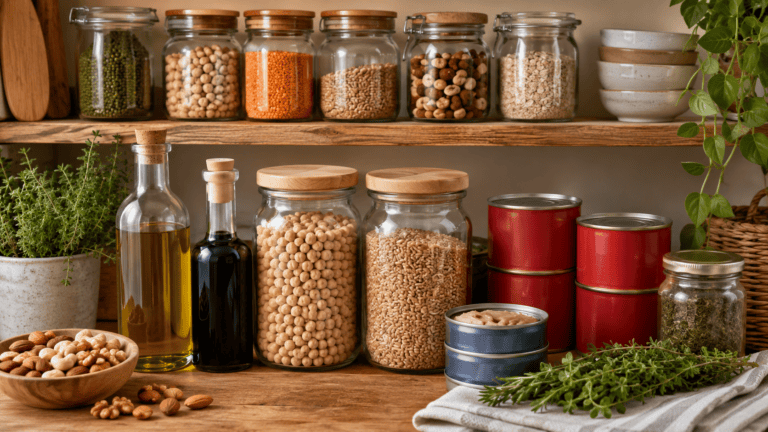
Keep a simple pantry: olive oil, beans, lentils, whole grains, canned tomatoes, tuna or sardines, nuts, seeds, herbs, spices, vinegar, and onions. With those staples, you can create soups, bowls, salads, dips, and quick skillet meals without starting from scratch.
Conclusion
Building a balanced diet with Mediterranean foods begins with a simple rhythm: more plants, satisfying proteins, whole-food carbohydrates, flavorful fats, and meals you genuinely enjoy. You do not need perfection, strict rules, or expensive ingredients. Start with one plate, one pantry staple, or one colorful vegetable, then let the pattern grow naturally.
For more ideas across food, wellness, and everyday Mediterranean living, Explore simple recipes, wellness ideas, and Mediterranean-inspired habits that make healthy living feel flavorful and realistic.
Visit Mediterranean Healthy Living |
Follow on Instagram
FREQUENTLY ASKED QUESTIONS
1. What foods are included in a Mediterranean diet?
Mediterranean eating usually emphasizes vegetables, fruits, whole grains, beans, lentils, nuts, seeds, olive oil, fish, seafood, and moderate amounts of dairy, eggs, and poultry. The American Heart Association notes that Mediterranean-style diets center on minimally processed, plant-based foods.
2. How do I make a Mediterranean meal balanced?
Use a plate approach: include vegetables or fruit, a grain or starchy vegetable, a protein food, and optional dairy or dairy alternative. USDA AgLab describes vegetables, fruits, grains, protein, and dairy as the key food groups for a healthy plate.
3. Can I eat pasta on a balanced Mediterranean diet?
Yes. Pasta can fit when portions are moderate and the meal includes vegetables, protein, and healthy fat. Try whole grain pasta with chickpeas, greens, tomatoes, tuna, olive oil, herbs, or a side salad.
4. Is the Mediterranean diet good for weight management?
It may support weight management when portions, hunger, activity, and overall calorie intake are balanced. Focus on filling foods like vegetables, beans, lentils, yogurt, fish, fruit, and whole grains instead of treating olive oil or nuts as unlimited.
5. How often should I eat fish in a Mediterranean diet?
Many Mediterranean-style meal plans include fish or seafood regularly, often a couple of times per week. Choose what fits your budget and preferences. Canned sardines, tuna, salmon, or frozen fish can be practical alternatives.
6. Do I have to give up red meat completely?
No. Red meat is usually eaten less often in a Mediterranean pattern, but it does not need to disappear. Smaller portions, leaner cuts, and meals that include beans, vegetables, and grains can create better balance.
7. What is a good Mediterranean breakfast?
A balanced breakfast could be Greek yogurt with berries and walnuts, oatmeal with figs and cinnamon, eggs with spinach and tomatoes, or whole grain toast with avocado and a boiled egg. Aim for protein, fiber, and flavor.
8. Are Mediterranean foods expensive?
They do not have to be. Beans, lentils, eggs, oats, seasonal produce, frozen vegetables, canned tomatoes, tuna, sardines, potatoes, and bulk whole grains are affordable staples. Use premium items like specialty cheeses or seafood more selectively.
9. Can vegetarians follow a balanced Mediterranean diet?
Yes. A vegetarian version can be rich in beans, lentils, chickpeas, yogurt, eggs if eaten, nuts, seeds, whole grains, vegetables, fruit, olive oil, herbs, and fermented foods. Pay attention to protein, iron, calcium, and vitamin B12.
10. What should I meal prep first?
Start with one grain, one protein, and two vegetables. For example, cook farro, make lentils, roast peppers and zucchini, and wash herbs. Add olive oil, lemon, yogurt sauce, or hummus to make quick meals.