

Table of Contents
For many years, dietary fat was viewed as something to avoid. Today, nutrition experts recognize that the type of fat you choose matters more than simply reducing all fats. Healthy fats are an important part of a balanced eating pattern, and they are one of the reasons the Mediterranean diet is widely studied and followed around the world.
The Mediterranean approach does not focus on eliminating fat. Instead, it emphasizes choosing quality sources such as extra virgin olive oil, nuts, seeds, fish, and other minimally processed foods. These ingredients have been enjoyed for generations across Mediterranean regions and are valued for their flavor, versatility, and nutritional contribution.
What Are Healthy Fats?
Healthy fats are mainly unsaturated fats found naturally in foods such as plants, fish, nuts, and seeds. The two primary types are monounsaturated fats and polyunsaturated fats.
Monounsaturated fats are especially common in Mediterranean cooking, with extra virgin olive oil being one of the best-known examples. Polyunsaturated fats include omega-3 fatty acids, which are found in foods such as fatty fish, walnuts, and some seeds.
Fats also help make meals satisfying and contribute to the absorption of fat-soluble vitamins, including vitamins A, D, E, and K. The goal is not to add unlimited amounts of fat, but to replace less beneficial fat choices with more nutrient-rich options.
The Mediterranean Diet Approach to Healthy Fats
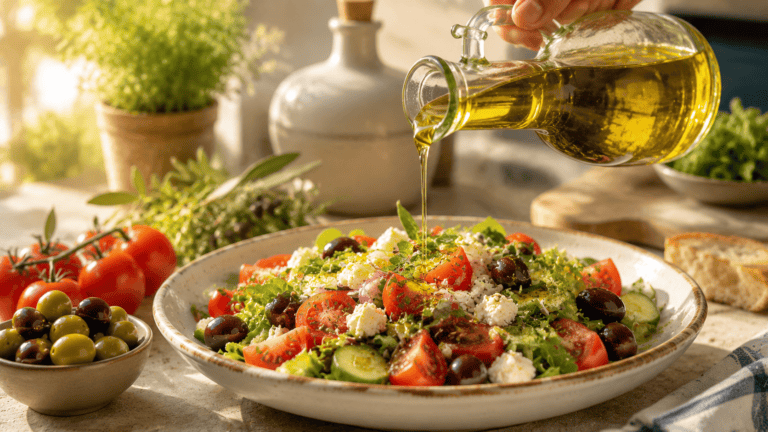
The Mediterranean diet uses fats as part of an overall eating pattern centered around vegetables, fruits, legumes, whole grains, herbs, and seafood. Instead of relying heavily on butter, highly processed foods, or fried foods, traditional Mediterranean meals often use olive oil, nuts, and seafood to add flavor and texture.
A typical Mediterranean kitchen may include:
- Extra virgin olive oil for cooking and dressings
- Olives as a flavorful addition to meals
- Almonds, walnuts, and other nuts for snacks or toppings
- Seeds added to yogurt, salads, or breakfast dishes
- Fish and seafood served regularly
- Avocado and other plant foods containing unsaturated fats
For beginners, the easiest approach is to focus on adding quality foods rather than trying to make complicated dietary changes. Simple swaps can make a meal more Mediterranean-inspired.
Extra Virgin Olive Oil: A Mediterranean Staple
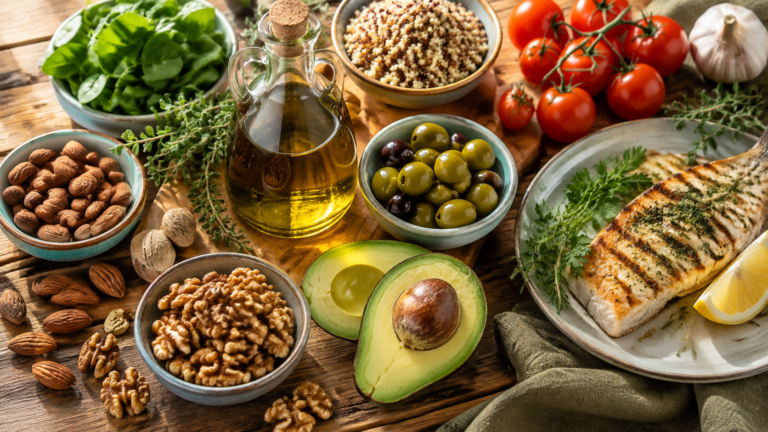
Extra virgin olive oil is one of the most recognizable foods associated with Mediterranean cuisine. It is commonly used in salad dressings, vegetable dishes, marinades, and many traditional recipes.
A beginner-friendly way to use olive oil is to replace some sources of saturated fat with olive oil when preparing meals. For example, try using olive oil-based dressings for vegetables or adding a small drizzle over cooked grains, beans, or roasted vegetables.
Choosing quality olive oil and storing it properly can help preserve its flavor. Keep bottles away from heat and direct sunlight, and use them regularly rather than storing them for long periods.
Nuts, Seeds, and Plant-Based Sources of Healthy Fats
Nuts and seeds are convenient sources of healthy fats and can easily fit into everyday meals. A small portion can add texture, flavor, and nutritional value to many dishes.
Try adding:
- Walnuts to oatmeal or salads
- Almonds as a snack
- Chia or flax seeds to yogurt or smoothies
- Pumpkin seeds to soups or grain bowls
Because nuts and seeds are energy-dense foods, portion awareness is helpful. They work best as part of a balanced meal pattern that includes vegetables, protein sources, and whole grains.
Fish and Omega-3 Fats
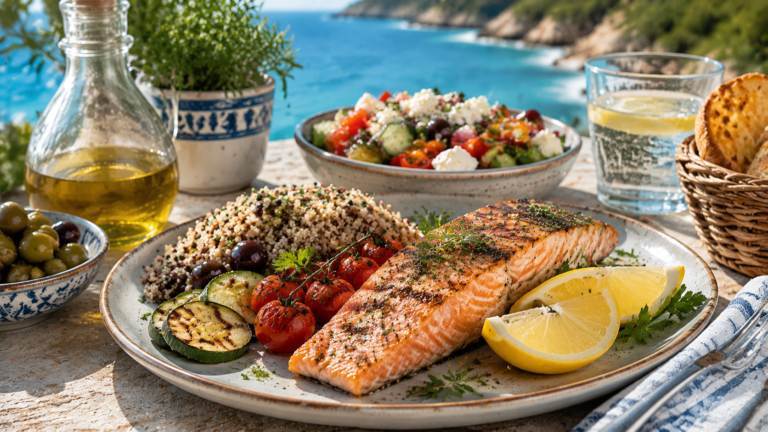
Fish is another important part of Mediterranean eating. Fatty fish such as salmon, sardines, and trout provide omega-3 fatty acids, a type of polyunsaturated fat.
Many Mediterranean-style meals combine fish with vegetables, herbs, olive oil, and whole grains. This creates simple meals that are flavorful without relying on heavy sauces or highly processed ingredients.
If you are new to eating fish, start with familiar recipes such as grilled fish with vegetables, Mediterranean-style fish bowls, or salads topped with seafood.
How Beginners Can Add More Healthy Fats
Adding healthy fats does not require completely changing your diet. Small steps can make Mediterranean eating more approachable.
Consider these simple ideas:
- Replace creamy dressings with olive oil-based options.
- Add a handful of nuts to breakfast or snacks.
- Include fish as a meal choice when possible.
- Use olives or avocado to add flavor to salads and bowls.
- Cook more meals using whole-food ingredients.
A Mediterranean lifestyle is about balance, enjoyment, and consistency. Healthy fats are only one part of this approach, alongside vegetables, legumes, fruits, whole grains, and mindful eating habits.
For more Mediterranean-inspired recipes and lifestyle ideas, explore resources available on the Mediterranean Healthy Living website.
Understanding Balance With Healthy Fats
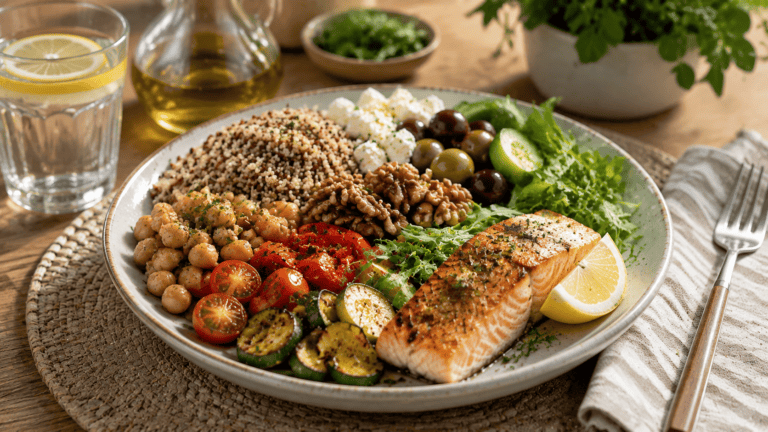
While healthy fats provide important nutrients, all fats contain calories, so overall balance matters. A nutritious eating pattern considers food quality, variety, portion sizes, and personal needs.
People with specific medical conditions, dietary restrictions, or nutrition concerns should discuss their individual needs with a qualified healthcare professional or registered dietitian.
The Mediterranean approach is not about following strict rules. It is about building meals around wholesome foods that have been enjoyed for generations. By choosing foods like olive oil, nuts, seeds, and fish more often, beginners can discover a practical way to include healthy fats in everyday eating.
Explore simple recipes, wellness ideas, and Mediterranean-inspired habits that make healthy living feel flavorful and realistic.
Visit Mediterranean Healthy Living
Follow on Instagram
FREQUENTLY ASKED QUESTIONS
1. What are healthy fats?
Healthy fats are mainly unsaturated fats found in foods such as olive oil, nuts, seeds, avocado, and fish. They are part of balanced eating patterns like the Mediterranean diet, where they are combined with vegetables, whole grains, legumes, and other whole foods.
2. Why are healthy fats included in the Mediterranean diet?
Healthy fats are included because Mediterranean eating focuses on food quality and traditional ingredients. Foods like olive oil, nuts, and seafood provide flavor and nutrients while supporting an overall balanced approach to meals.
3. Is olive oil considered a healthy fat?
Yes. Extra virgin olive oil is a major source of monounsaturated fat and is a traditional ingredient in Mediterranean cooking. The American Heart Association’s explanation of fats in foods describes unsaturated fats as preferred choices compared with saturated fats.
4. What foods are naturally high in healthy fats?
Common sources include extra virgin olive oil, olives, walnuts, almonds, chia seeds, flax seeds, avocado, salmon, sardines, and other fatty fish. These foods can be added to meals in simple ways, such as toppings, dressings, or main ingredients.
5. Are all fats unhealthy?
No. Fat is a nutrient needed by the body, but different types of fats have different nutritional roles. A balanced diet focuses on choosing healthier sources more often while limiting foods high in less beneficial fats.
6. How much healthy fat should I eat each day?
Individual needs vary depending on age, activity level, health status, and overall diet. The Dietary Guidelines for Americans provide general guidance on creating balanced eating patterns that include appropriate amounts of fats.
7. Can I cook with olive oil?
Yes. Olive oil is commonly used in Mediterranean cooking for dressings, sautéing, roasting, and finishing dishes. The best choice depends on the recipe, cooking method, and personal preference.
8. Are nuts a good source of healthy fats?
Yes. Nuts such as walnuts and almonds provide unsaturated fats along with other nutrients. They can be added to meals or eaten as snacks, but portion awareness is helpful because nuts are calorie-dense.
9. Do Mediterranean meals contain only healthy fats?
Mediterranean meals emphasize healthier fat sources, but the overall eating pattern also includes vegetables, fruits, legumes, grains, herbs, and protein sources. Balance and variety are key parts of the approach.
10. How can beginners start eating more healthy fats?
Beginners can start by making small changes, such as using olive oil-based dressings, adding nuts to meals, choosing fish more often, and including more minimally processed Mediterranean-style foods.