

Table of Contents
Introduction
June marks a peak in Mediterranean agriculture, offering a bounty of fresh fruits and vegetables. These sun-ripened ingredients are not only vibrant and flavorful but also packed with nutrients that support heart and gut health. By focusing on seasonal produce, you harness maximum freshness, vitamins, minerals, and antioxidants, all crucial for cardiovascular function and a balanced digestive system.
Heart-Healthy Mediterranean Produce in June
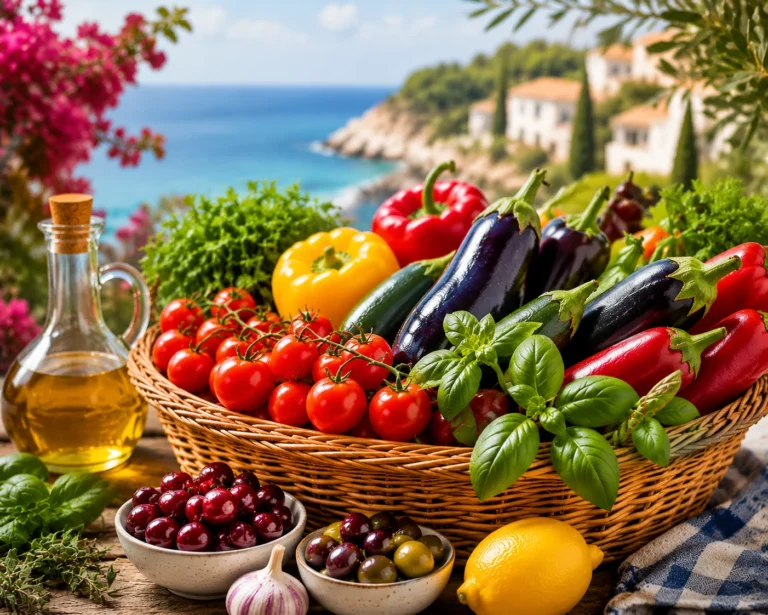
Fruits and vegetables harvested in June often contain high levels of fiber, potassium, and antioxidants, nutrients strongly associated with cardiovascular wellness.
- Tomatoes: Rich in lycopene, potassium, and vitamin C, tomatoes may help reduce blood pressure and improve arterial function. Use fresh cherry or heirloom tomatoes in salads or roasted dishes.
- Bell peppers: Colorful and crisp, they are packed with vitamin C and polyphenols, which may support healthy blood vessels.
- Zucchini and eggplant: Low in calories and high in fiber, these vegetables help maintain healthy cholesterol levels and improve satiety. Grilling or roasting preserves nutrients while enhancing flavor.
- Leafy greens (arugula, spinach): Abundant in folate and magnesium, leafy greens promote heart health and can be incorporated into salads, Mediterranean bowls, or light sautés.
For more heart-friendly produce ideas, check out Mediterranean healthy recipes.
Gut-Friendly Fruits and Vegetables
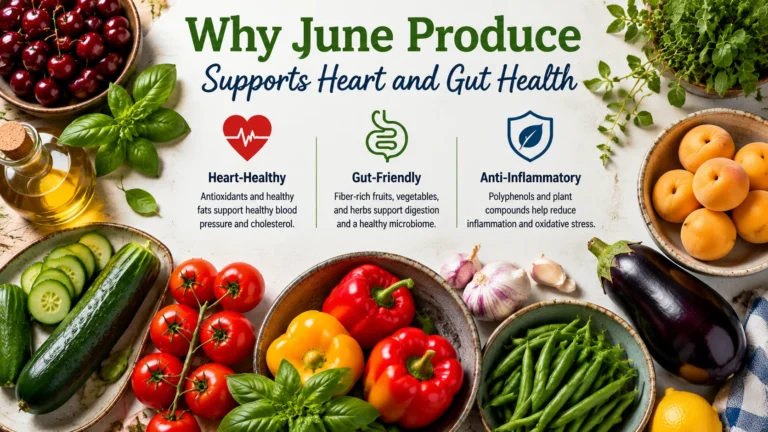
Fiber-rich produce supports digestion and fosters a diverse gut microbiome, which is crucial for overall wellness.
- Cucumbers: Hydrating and easy to digest, they are perfect for gut-friendly salads.
- Cherries and apricots: Provide natural sweetness and polyphenols, which may positively influence gut bacteria.
- Figs: High in soluble fiber, figs can aid digestion and help maintain regular bowel movements.
- Fresh herbs (mint, parsley, basil): Contain bioactive compounds that can support gut health and enhance flavor naturally.
Including a variety of colors in your diet maximizes prebiotic and antioxidant intake, supporting both gut and heart function.
Nutrient Synergy in Mediterranean Recipes
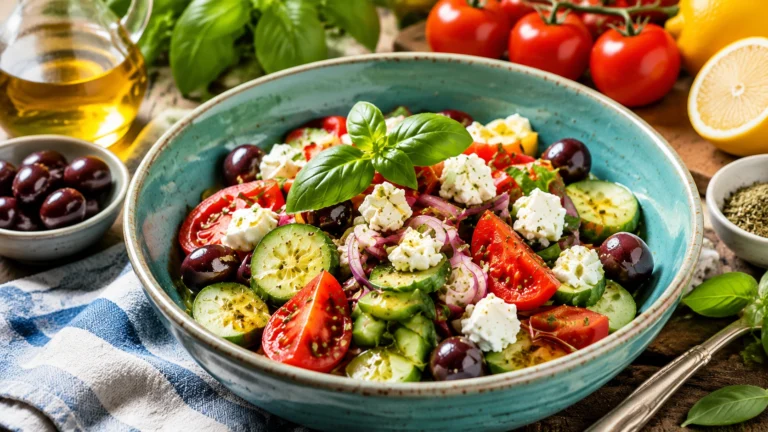
Combining June produce in meals can amplify health benefits. Consider these nutrient-packed strategies:
- Salads with olive oil: Drizzle extra virgin olive oil over fresh tomatoes, cucumbers, and arugula. The healthy fats improve absorption of fat-soluble vitamins A, D, E, and K.
- Grilled vegetable bowls: Roast zucchini, eggplant, and bell peppers with herbs. Serve over whole grains like farro or quinoa for fiber and sustained energy.
- Fruit-forward desserts: Combine cherries, figs, and apricots with a touch of yogurt or nuts. This supports gut-friendly bacteria while offering antioxidants for heart health.
- Herb infusions: Mint or basil in water or tea provides gentle digestive support and aromatic flavor without added sugar.
Learn more about Mediterranean meal planning at Mediterranean healthy living recipes.
Seasonal Eating Tips for Maximum Health
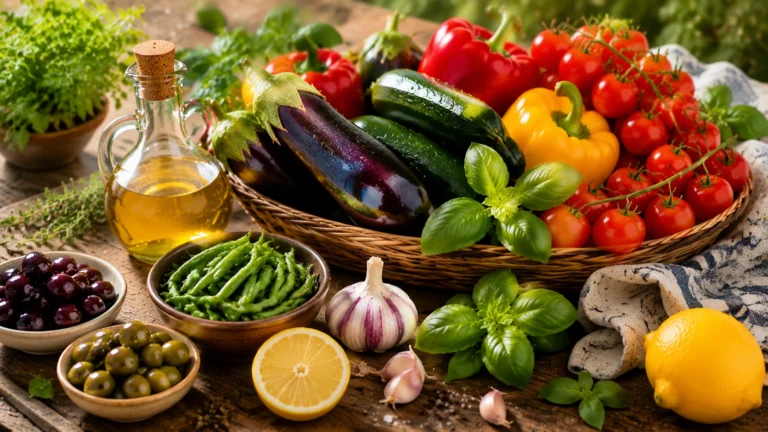
- Shop local and in-season: Farmers’ markets often have the freshest produce, which preserves nutrients and flavor.
- Minimal processing: Steam, grill, roast, or eat raw to maintain vitamins, minerals, and phytonutrients.
- Diverse plate: Include a rainbow of fruits and vegetables daily to cover a wide spectrum of nutrients.
- Batch prep: Chop and store vegetables for quick, heart- and gut-friendly meals throughout the week.
Seasonal eating aligns with the Mediterranean philosophy: eating fresh, minimally processed foods that nourish your body naturally.
Integrating June Produce into Daily Life
Start small by adding one or two seasonal items to each meal. Examples:
- Breakfast: Spinach and arugula omelet with fresh herbs.
- Lunch: Tomato, cucumber, and bell pepper salad with olive oil and lemon.
- Snack: Fresh cherries or figs.
- Dinner: Grilled eggplant and zucchini over whole grains with a sprinkle of parsley.
Over time, this approach supports heart and gut health while keeping meals flavorful and satisfying.
Conclusion
June’s Mediterranean produce offers an ideal opportunity to boost heart and gut health. By emphasizing fresh, fiber-rich vegetables, antioxidant-packed fruits, and aromatic herbs, you nourish your body with nature’s best. Incorporating these ingredients into simple, flavorful meals is a sustainable, enjoyable way to follow a Mediterranean lifestyle.
Discover the fresh flavors of June’s Mediterranean produce and start creating heart- and gut-friendly meals today. Make seasonal eating a simple, delicious habit.
FREQUENTLY ASKED QUESTIONS
- Which Mediterranean vegetables are best for heart health in June?
Tomatoes, bell peppers, zucchini, eggplant, and leafy greens like spinach and arugula are nutrient-rich and support heart function with fiber, potassium, and antioxidants. - Can June fruits improve gut health?
Yes. Cherries, apricots, and figs contain fiber and polyphenols that help maintain healthy gut bacteria and support digestion. - How should I cook Mediterranean vegetables to preserve nutrients?
Lightly steaming, roasting, or grilling preserves vitamins and antioxidants better than deep frying. Raw salads also retain maximum nutrient content. - Are herbs like mint and basil really beneficial for digestion?
Yes. Fresh herbs contain bioactive compounds that support digestion, reduce bloating, and provide flavor without added salt or sugar. - Is olive oil essential in Mediterranean diets for heart health?
Extra virgin olive oil provides monounsaturated fats and polyphenols that may improve cholesterol levels and blood vessel function. Moderate daily use is recommended. - Can seasonal eating reduce inflammation?
Yes. Seasonal Mediterranean produce is rich in antioxidants and phytonutrients, which can help lower inflammatory markers naturally. - Are figs high in sugar?
Figs contain natural sugars but also provide fiber, which slows absorption and supports healthy digestion. Enjoy them in moderation as part of a balanced diet. - Do I need supplements if I eat seasonal produce?
Most nutrient needs can be met with a varied diet. For specific health concerns, consult a healthcare provider. - Where can I find reliable information on Mediterranean diet benefits?
Authoritative sources include the Harvard T.H. Chan School of Public Health and Mayo Clinic. - Can children benefit from June Mediterranean produce?
Absolutely. Fiber-rich vegetables and antioxidant-packed fruits support growth, digestion, and heart health from a young age.