

Table of Contents
Mediterranean diet hydration is not just about drinking more water. It is a daily rhythm built around fresh produce, simple drinks, mineral-rich foods, and meals that naturally contain fluid. Across Mediterranean kitchens, hydration often shows up as a bowl of chilled tomato soup, watermelon after lunch, cucumber salad with lemon, mint tea in the afternoon, or water served with every meal.
For most healthy adults, the goal is not to chase a perfect number all day. It is to stay consistent, notice thirst cues, and eat in a way that supports fluid balance. The Mediterranean approach makes this easier because many of its everyday foods are naturally juicy, colorful, and refreshing.
What Mediterranean Diet Hydration Really Means
Mediterranean diet hydration means getting fluids from both drinks and foods. Water is still the main beverage, but fruits, vegetables, soups, yogurt, legumes, and herbal infusions can all support your daily intake.
This pattern also encourages balance. Instead of relying on sugary drinks or highly processed electrolyte beverages, Mediterranean meals often pair water-rich foods with minerals from vegetables, beans, nuts, seeds, seafood, and dairy foods like yogurt or kefir. That combination helps make hydration feel satisfying rather than forced.
It also fits naturally with the broader idea of Mediterranean wellness habits: eat fresh food, move gently, rest well, and create daily routines that feel enjoyable enough to repeat.
Start With Water-Rich Mediterranean Foods
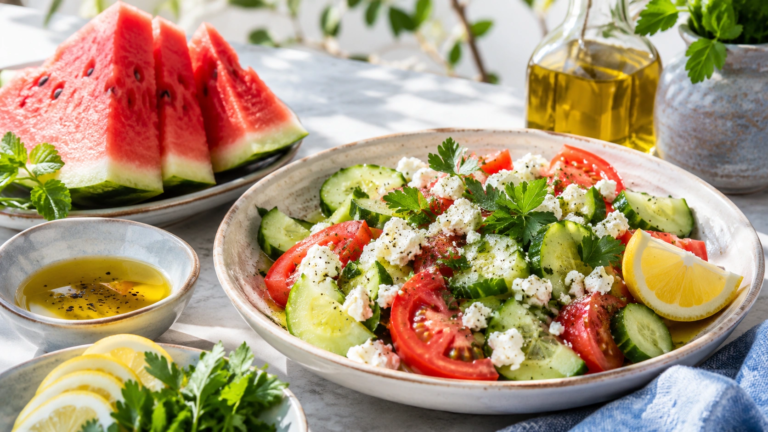
Some of the best hydration-supporting foods are already staples in Mediterranean cooking. Cucumbers, tomatoes, zucchini, leafy greens, citrus, strawberries, melon, grapes, peaches, peppers, and eggplant bring moisture, fiber, flavor, and nutrients to the plate.
A simple Greek-style cucumber and tomato salad is a perfect example. Add chopped cucumber, tomato, parsley, a little red onion, lemon juice, extra virgin olive oil, and a pinch of salt. You get crunch, fluid, potassium-containing produce, and enough flavor to make the meal feel complete.
Watermelon is another Mediterranean favorite, especially in warm weather. Try it with mint, cucumber, and a small amount of feta for a refreshing snack. Citrus fruits such as oranges, lemons, and grapefruit can also brighten water, salads, fish, and grain bowls.
Use Soups, Salads, and Sauces as Hydration Helpers
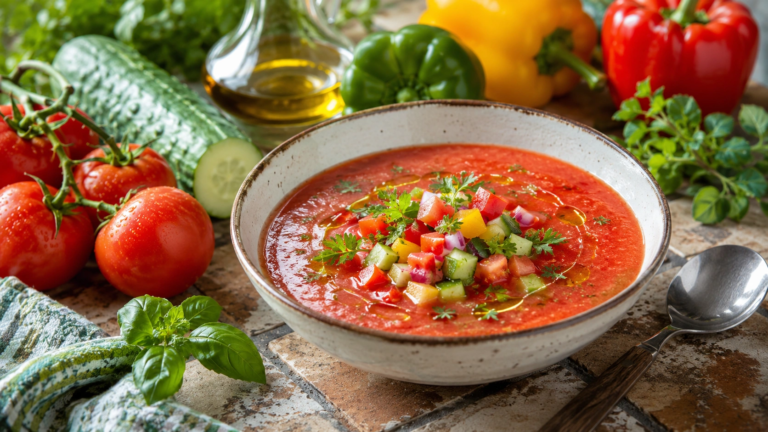
Mediterranean food makes hydration feel like eating well, not following a rule. Gazpacho, a chilled soup made with tomatoes, cucumber, peppers, garlic, olive oil, and vinegar, is one of the most refreshing examples. It is especially useful when hot weather makes heavy meals less appealing.
Brothy vegetable soups, lentil soups, bean stews, and minestrone-style bowls also contribute fluid while offering fiber and minerals. They can be especially helpful in cooler months when people may not feel as thirsty but still need steady fluids.
Sauces count too. Tzatziki made with yogurt, cucumber, garlic, and dill adds moisture to grilled vegetables, fish, falafel, or whole-grain pita. Tomato-based sauces, lemon-herb dressings, and herb-packed salsas can make meals juicier without relying on heavy, salty condiments.
Choose Mediterranean Drinks That Support Daily Balance
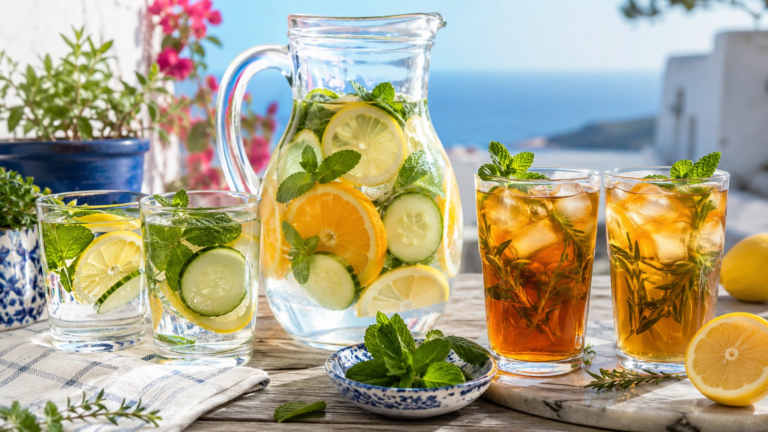
Water is the foundation. Keep a pitcher nearby and make it more appealing with sliced lemon, orange, cucumber, mint, basil, rosemary, or berries. This adds aroma and flavor without turning water into a sugary drink.
Unsweetened herbal teas are another Mediterranean-friendly option. Mint tea, chamomile tea, sage tea, mountain tea, and hibiscus tea can be enjoyed hot or iced. They are useful for people who want variety but do not want added sugar.
Coffee and regular tea can fit for many adults, but they should not crowd out plain water. Sweetened iced teas, sodas, and large juice drinks are less helpful as daily hydration habits because they can add a lot of sugar without much fullness. A better Mediterranean-style choice is sparkling water with citrus, iced mint tea, or diluted pomegranate juice served occasionally.
Do Not Forget Electrolytes From Real Foods
Electrolytes are minerals such as sodium, potassium, magnesium, and calcium that help the body manage fluid balance. You do not need a sports drink for ordinary daily hydration unless you are sweating heavily, exercising for a long time, or following medical guidance.
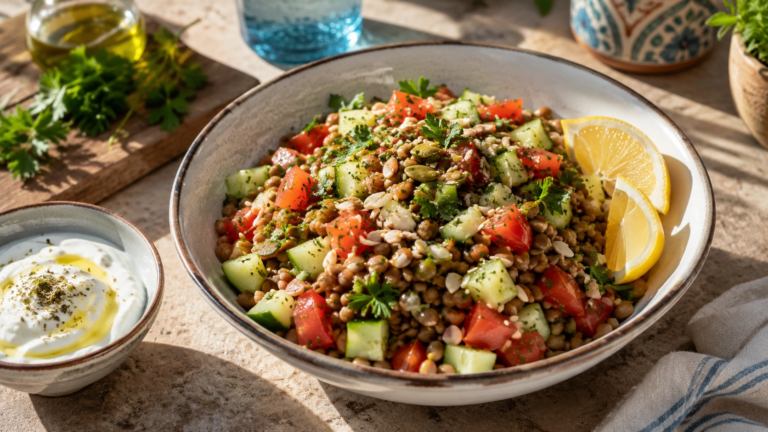
Mediterranean meals naturally include electrolyte-supporting foods. Tomatoes, leafy greens, oranges, beans, lentils, yogurt, nuts, seeds, fish, and potatoes all bring different minerals to the table. A lunch of lentil salad with tomatoes, cucumber, parsley, olive oil, and lemon is more than refreshing; it also provides fiber, plant protein, and mineral-rich ingredients.
Salt can be useful in small amounts, especially in hot weather or after sweating, but more is not always better. People with high blood pressure, kidney disease, heart disease, or fluid restrictions should follow their clinician’s advice.
Build a Simple Mediterranean Hydration Rhythm
Try linking hydration to meals and daily cues. Drink a glass of water when you wake up, with meals, and between meals. Add water-rich produce to lunch and dinner. Keep herbal tea or infused water available in the afternoon. After walking, gardening, or exercising, drink again and choose a snack with fruit, yogurt, or vegetables.
Your body gives feedback. Thirst, dry mouth, fatigue, headache, and darker urine can be signs that you may need more fluids. Pale yellow urine is often a practical everyday sign that your fluid intake is on track, though vitamins, medications, and health conditions can change urine color.
A Mediterranean hydration day might look like this: water with lemon in the morning, Greek yogurt with berries at breakfast, cucumber-tomato salad at lunch, mint tea in the afternoon, brothy vegetable soup at dinner, and watermelon or orange slices for dessert.
Mediterranean Hydration Tips for Hot Days
On hot or humid days, start earlier. Drink before you feel extremely thirsty, carry water when walking outside, and include juicy foods at meals. Chilled soups, salads, fruit, yogurt bowls, and infused water are easy choices.
If you are exercising, sweating heavily, pregnant, breastfeeding, older, or recovering from vomiting, fever, or diarrhea, your fluid needs may increase. People with kidney, heart, or liver conditions may need personalized fluid guidance.
This article is for general education only and is not medical advice. For ongoing dehydration symptoms, fluid restrictions, electrolyte concerns, or a medical condition that affects hydration, speak with a qualified healthcare professional.
The Takeaway
The best Mediterranean hydration secret is consistency. Drink water, eat juicy produce, use soups and salads often, enjoy unsweetened herbal drinks, and let fresh herbs, citrus, and simple meals make hydration appealing. When hydration feels like part of your lifestyle rather than a chore, it becomes easier to keep your body balanced every day.
Bring Mediterranean Wellness Into Your Daily Routine
Make hydration, nourishing meals, and simple wellness rituals part of your everyday rhythm. Explore more Mediterranean healthy living ideas and join us on Instagram for fresh inspiration.
FREQUENTLY ASKED QUESTIONS
1. What is Mediterranean diet hydration?
Mediterranean diet hydration means supporting fluid needs with water, unsweetened drinks, and water-rich foods such as tomatoes, cucumbers, melon, citrus, soups, and yogurt-based sauces. It focuses on simple daily habits rather than relying on sugary drinks or extreme water goals.
2. What are the most hydrating Mediterranean foods?
Great choices include cucumber, tomato, zucchini, watermelon, melon, strawberries, citrus fruits, leafy greens, peppers, eggplant, brothy soups, and yogurt. These foods provide fluid along with flavor, fiber, and nutrients that make meals more satisfying.
3. How much water should I drink each day?
Needs vary by body size, activity, temperature, pregnancy, breastfeeding, and health status. Mayo Clinic’s hydration guidance notes that total fluid can come from water, other beverages, and food, and that some adults need more or less than average estimates. (Mayo Clinic)
4. Can food really count toward hydration?
Yes. Many fruits and vegetables contain a high percentage of water, so they can contribute to overall fluid intake. Food should not replace water completely, but juicy produce, soups, and yogurt-based dishes can support daily hydration.
5. Is the Mediterranean diet naturally good for hydration?
Yes, it can be. Harvard Nutrition Source describes the Mediterranean diet as a primarily plant-based pattern that includes fruits, vegetables, legumes, whole grains, olive oil, herbs, and water as the main daily beverage. (The Nutrition Source)
6. Are herbal teas Mediterranean-friendly for hydration?
Unsweetened herbal teas fit well with Mediterranean-style living. Mint, chamomile, sage, hibiscus, and mountain tea can be served hot or iced. They add variety without added sugar and may help people drink more fluids comfortably.
7. What Mediterranean drinks should I limit?
Limit sugary sodas, sweet tea, large juice drinks, and highly sweetened coffee beverages. They may provide fluid, but they can also add excess sugar and calories. Choose water, sparkling water, infused water, and unsweetened herbal tea more often.
8. Do I need electrolyte drinks every day?
Most healthy adults do not need electrolyte drinks for normal daily hydration. Whole foods such as tomatoes, beans, lentils, yogurt, leafy greens, nuts, seeds, and fish can provide minerals. Electrolyte drinks may be useful during heavy sweating or illness.
9. What is a Mediterranean hydration snack?
Try watermelon with mint, cucumber slices with tzatziki, Greek yogurt with berries, orange wedges with walnuts, or cherry tomatoes with a little feta. These snacks provide fluid, flavor, and nutrients without feeling like plain water alone.
10. How can I remember to hydrate Mediterranean-style?
Pair water with routines: after waking, with meals, before walks, and during afternoon breaks. Keep sliced citrus, cucumber, or mint ready. Add one water-rich fruit or vegetable to lunch and dinner to make hydration automatic.