

Table of Contents
Sleep quality is deeply influenced by diet, routine, and lifestyle. The Mediterranean rituals for restful sleep and relaxation provide evidence-backed strategies rooted in the traditional lifestyle of the Mediterranean basin. These practices integrate whole-food nutrition principles, protective monounsaturated fat recipes, and culturally ingrained routines that support metabolic and neurological health. Following these rituals can reduce chronic cellular inflammation, enhance gut microbiome diversity, and stabilize circadian rhythms.
A foundational step is understanding heart-healthy meal preparation plans. Meals in Mediterranean households typically feature cold-pressed extra virgin olive oil, rich in monounsaturated fats, used at precise quantities: 1–2 tablespoons per main dish. For example, drizzle 15 mL of high-grade olive oil over steamed zucchini, eggplant, and cherry tomatoes to optimize anti-inflammatory benefits. Diets abundant in monounsaturated fats can lower cardiovascular event risk while supporting neurotransmitter balance, aiding better sleep.
For meal inspiration and detailed Mediterranean recipes, visit Mediterranean Healthy Living.
Evening Dietary Patterns
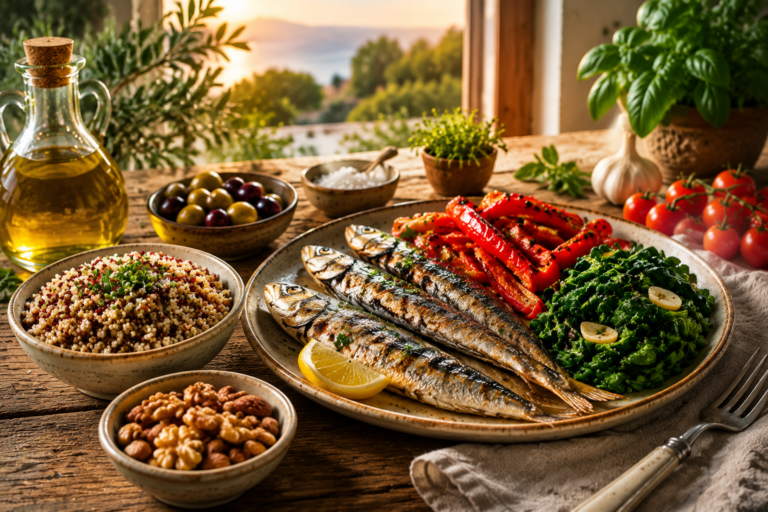
Timing and composition of evening meals matter. The Mediterranean pattern favors light dinners at least two hours before sleep. Key focus areas include:
Omega-3 Fat Sources
Include 100–150 grams of grilled sardines or mackerel three times per week. Omega-3 fatty acids enhance melatonin production and reduce systemic inflammation.
High-Fiber Vegetables
Roasted bell peppers, spinach, and artichokes provide 6–8 grams of fiber per serving, supporting gut health and stabilizing blood sugar during sleep.
Complex Carbohydrate Pairings
Include 50–60 grams of cooked quinoa or farro to gently increase serotonin precursors. This combination aids relaxation without blood sugar spikes.
Practical Example: Sauté 100 grams of spinach in 10 mL cold-pressed olive oil, toss with 50 grams of cooked quinoa, 50 grams roasted red peppers, and season with herbs like rosemary and thyme. This 350-calorie meal delivers cardiovascular and neuroprotective benefits while promoting a calm pre-sleep metabolic state.
Herbal and Sensory Rituals

Traditional Mediterranean households emphasize herbal teas and aromatherapy for evening relaxation:
- Chamomile or linden flower infusions: Steep 5–7 minutes for mild anxiolytic effects.
- Lavender essential oil (1% blend): Apply to wrists or behind ears to reduce sympathetic nervous system activation.
Pair these rituals with 5–10 minutes of deep diaphragmatic breathing a practice linked to Blue Zone aging secrets, promoting longevity and reducing insomnia prevalence.
Movement and Exposure Practices
Moderate physical activity is embedded in Mediterranean life. Recommendations include:
- Late-afternoon walks (20–30 minutes): Promote parasympathetic dominance by bedtime.
- Outdoor exposure: Maintains circadian alignment by modulating melatonin and cortisol rhythms.
- Avoid high-intensity workouts within 2 hours of sleep to prevent hyperarousal.
Meal Composition Details
Protein
Include 90–120 grams of grilled chicken, turkey, or plant-based legumes. Tryptophan in these sources facilitates serotonin production, contributing to relaxation.
Healthy Fats
Incorporate 20–25 grams of almonds or walnuts for alpha-linolenic acid and magnesium, both linked to sleep quality.
Antioxidant-Rich Produce
Olives, tomatoes, cucumbers, and citrus fruit supply polyphenols that control chronic cellular inflammation and support vascular health.
Example Dinner Plate: 100 grams grilled sea bass, 70 grams roasted Mediterranean vegetables, 10 mL olive oil, 20 grams walnuts, and a side salad of arugula, cucumber, and pomegranate seeds.
Kitchen Techniques
- Cold-pressed olive oil: Avoid heating above 180°C to preserve polyphenols; drizzle post-cooking for maximum benefit.
- Slow-roasting vegetables: 150°C for 30–35 minutes retains antioxidants and concentrates flavors.
- Mindful meal preparation: Engage all senses smell, sight, touch while cooking to reduce stress hormones.
Sleep Environment Optimization
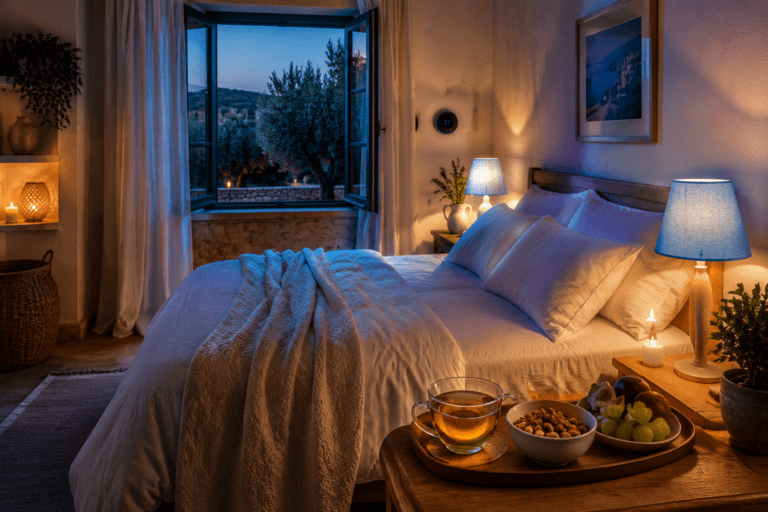
Mediterranean rituals extend to the bedroom:
Maintain 18–20°C room temperature with natural ventilation.
Dim lights 60–90 minutes before bedtime to boost melatonin.
Reduce blue-light exposure with window treatments and limit electronic device usage.
Learn More and Explore Recipes,
Frequently Asked Questions
- How do Mediterranean meals improve sleep quality?
Rich in omega-3s, fiber, and monounsaturated fats, these meals regulate circadian rhythm and reduce inflammation. Mayo Clinic - What are the key herbs for relaxation in this diet?
Chamomile, linden, and lavender reduce stress and support sleep onset. - How much olive oil should be used daily?
20–30 mL (1–2 tablespoons) of cold-pressed extra virgin olive oil, preferably split between lunch and dinner. - Can nuts help with insomnia?
Yes, almonds and walnuts provide magnesium and tryptophan, promoting relaxation and melatonin synthesis. - Why is evening exercise recommended?
Moderate late-afternoon activity aligns circadian rhythms without causing hyperarousal before bedtime. - Are fish oils necessary?
Fatty fish 2–3 times per week supplies marine-derived omega-3s, essential for neurotransmitter regulation. - Does meal timing matter?
Yes, finishing dinner 2–3 hours before sleep prevents metabolic interference with melatonin production. - How does fiber affect sleep?
Soluble fiber stabilizes blood glucose and supports gut microbiota, influencing sleep hormone production. - What role do antioxidants play?
Polyphenols in vegetables, fruits, and olive oil reduce chronic cellular inflammation and improve cardiovascular and neural health. - 10. Are Blue Zone practices relevant today?
Yes, they provide practical, culturally rooted methods for longevity, relaxation, and restorative sleep. National Institutes of Health