

Table of Contents
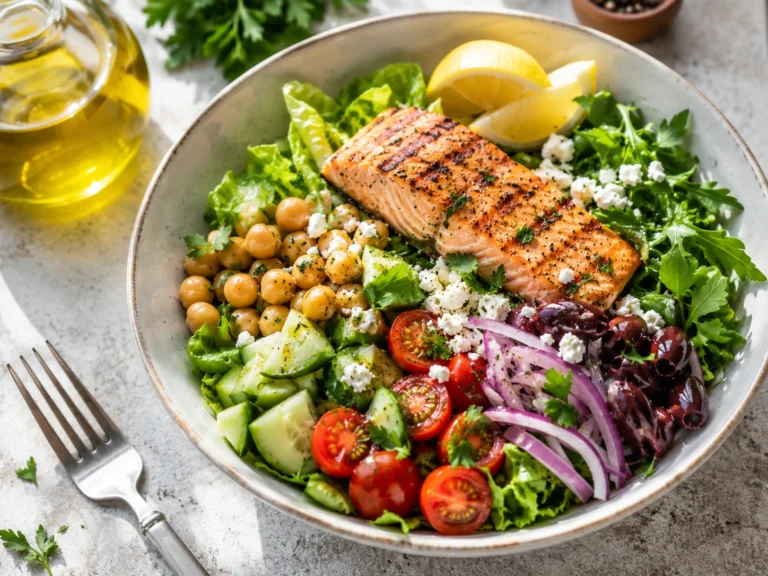
Mediterranean salads earn their reputation because they are built like meals, not decorations beside a plate. A proper bowl gives vegetables, legumes, herbs, olive oil, seafood or cheese, slow carbohydrates, and minerals in one balanced serving. Within the traditional lifestyle of Mediterranean basin communities, salad is eaten with bread, fish, beans, grilled vegetables, and shared conversation. For practical regional cooking ideas, Mediterranean Healthy Living offers recipes that reflect this simple food culture.
Start with a large mixing bowl, not a small side plate. Add 2 cups chopped romaine, arugula, purslane, baby spinach, or parsley. Add 1 cup diced cucumber, 1 cup ripe tomato, ½ cup red onion, ½ cup roasted red pepper, and ¼ cup chopped radish or fennel. Add ½ cup chickpeas, lentils, white beans, bulgur, or farro. Add 3 ounces grilled sardines, salmon, tuna, chicken, boiled egg, or ¾ cup beans. Dress with 1 tablespoon extra virgin olive oil, 1 tablespoon lemon juice, 1 teaspoon red wine vinegar, black pepper, oregano, and a small pinch of salt.
Why Mediterranean Salads Fit Whole-Food Nutrition Principles
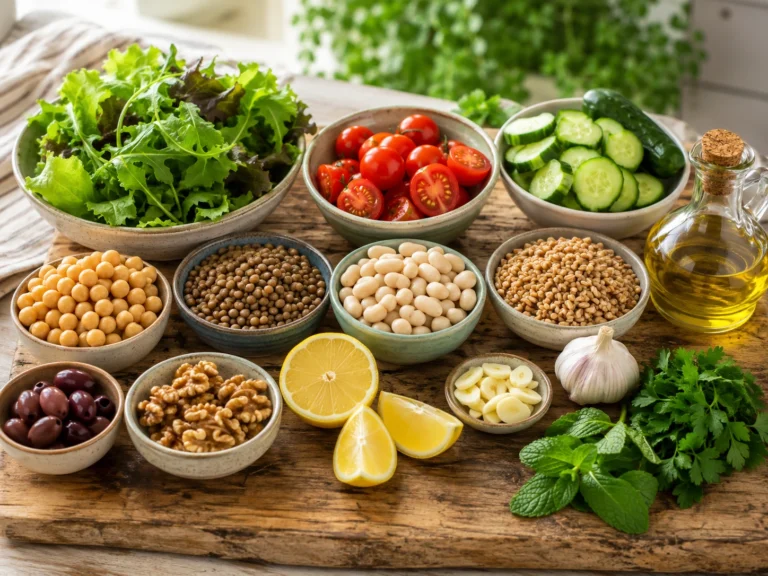
Whole-food nutrition principles work best when a meal has volume, fiber, fat, protein, and flavour. Mediterranean salads deliver all five. Water-rich vegetables stretch the meal without excess calories. Beans and whole grains provide dietary fiber gut health support. Protein slows hunger. Olive oil carries fat-soluble antioxidants from herbs and vegetables.
This structure also helps metabolic health. A bowl with chickpeas, cucumber, tomato, herbs, olive oil, and fish digests more slowly than white rice, fries, or sweetened cereal. Fiber reduces the speed of glucose absorption. Protein supports muscle maintenance. Acid from lemon or vinegar improves flavour while helping the meal feel lighter. This is practical food chemistry, not a diet trick.
Mediterranean Salads for Heart-Healthy Meal Preparation Plans
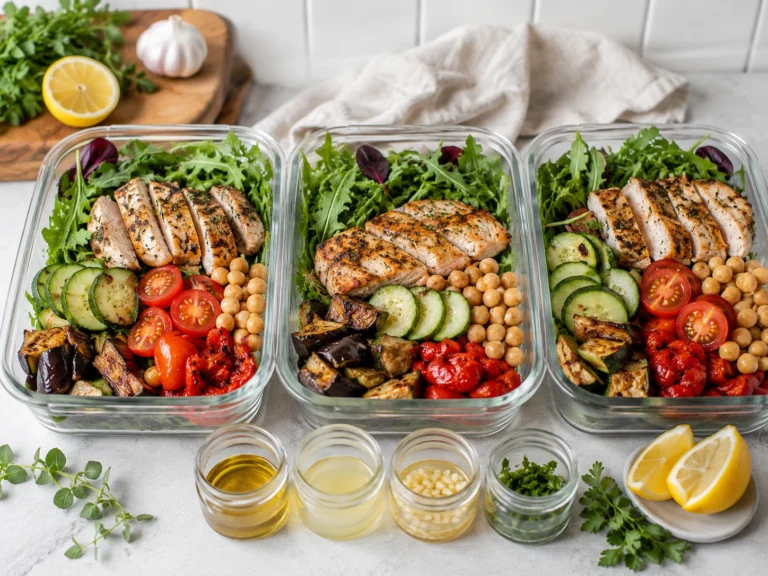
Heart-healthy meal preparation plans should be simple enough to repeat. On Sunday, roast 4 cups zucchini, eggplant, carrot, and bell pepper at 400°F for 25 minutes. Cook 2 cups lentils or chickpeas. Wash greens, dry them well, and store them in a towel-lined container. Mix a dressing with 6 tablespoons olive oil, 2 tablespoons lemon juice, 1 tablespoon vinegar, 1 grated garlic clove, and 1 teaspoon dried oregano.
During the week, build lunch in this order: 2 cups greens, 1 cup vegetables, ½ cup legumes or grains, 3 ounces protein, 1 tablespoon dressing, herbs on top. This pattern supports cardiovascular event risk reduction because it replaces processed meat, refined snacks, and creamy sauces with potassium-rich plants, soluble fiber, and unsaturated fat.
Olive Oil Quality, Monounsaturated Fat, and Inflammation Control
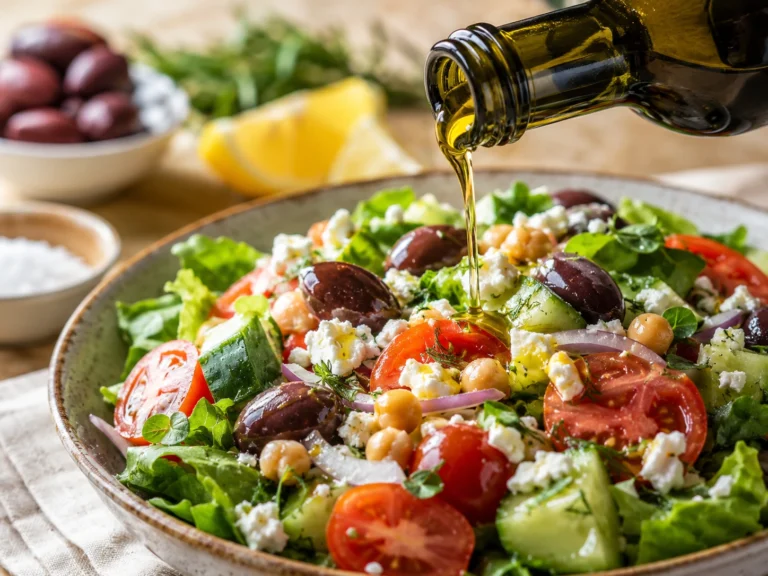
Cold-pressed olive oil wellness depends on grade and freshness. Choose extra virgin olive oil in dark glass or metal tins. Look for a harvest date, not only a best-before date. Good oil smells grassy, fruity, or peppery. A slight throat sting often signals phenolic compounds. Store it away from heat and light, and use it within a few months after opening.
Protective monounsaturated fat recipes are common in Greek, Italian, Spanish, Turkish, and Lebanese kitchens because olive oil makes vegetables satisfying. It helps people eat more bitter greens, herbs, beans, and fish without relying on sugar-heavy dressings. Extra virgin olive oil, walnuts, olives, and avocado also support chronic cellular inflammation control when they replace butter, shortening, and fried toppings.
Blue Zone Aging Secrets in a Salad Bowl
Blue Zone aging secrets are not hidden in supplements. They come from repeated daily habits: plants at most meals, moderate portions, movement, social eating, and traditional cooking. A Sardinian-style salad might use 2 cups bitter greens, ½ cup white beans, ¼ cup artichoke hearts, 2 tablespoons pecorino, mint, lemon, and olive oil. A Cretan bowl might use tomatoes, cucumber, purslane, olives, barley rusk, oregano, and feta.
These salads are nutrient-dense because they combine minerals, polyphenols, carotenoids, and fiber. Add marine-derived omega-3 fat sources twice weekly, such as sardines, anchovies, trout, salmon, or mackerel. Use 3 ounces per serving. For plant-based meals, use lentils, chickpeas, walnuts, and sesame tahini, but remember that plant omega-3 is not the same as marine EPA and DHA.
Salt still matters. Feta, olives, capers, anchovies, and pickled vegetables add flavour but also sodium. Rinse olives and capers. Use 1 to 2 tablespoons feta, not a full block. Add lemon zest, parsley, dill, mint, basil, sumac, cumin, or smoked paprika to increase flavour without adding more salt.
Five Nutrient-Packed Mediterranean Salad Formulas
Greek village bowl: 1 cup tomato, 1 cup cucumber, ½ cup green pepper, ¼ cup red onion, ¼ cup olives, 2 tablespoons feta, oregano, and olive oil.
Lebanese tabbouleh plate: 2 cups parsley, ½ cup mint, ½ cup tomato, ¼ cup bulgur, lemon, olive oil, and cucumber.
Tunisian chickpea bowl: ¾ cup chickpeas, roasted carrot, cucumber, parsley, boiled egg, harissa, cumin, and lemon.
Italian tuna bean salad: ¾ cup cannellini beans, 3 ounces tuna, celery, arugula, capers, parsley, lemon, and olive oil.
Spanish sardine salad: roasted peppers, white beans, sardines, red onion, sherry vinegar, parsley, and cracked pepper.
For the best plate, aim for half vegetables, one quarter protein, one quarter beans or grains, plus measured olive oil. That balance makes Mediterranean salads filling, colourful, and clinically sensible for daily eating. Serve them cold, room temperature, or slightly warm; the method matters less than the steady habit of building a balanced, vegetable-rich bowl every day at home with confidence.
Explore more Mediterranean recipes: https://mediterraneanhealthyliving.com
Follow for more daily food inspiration: https://www.instagram.com/mediterraneanhealthyliving/
FAQs
- Are Mediterranean salads healthy enough to eat every day?
Yes. When they include vegetables, legumes, olive oil, herbs, and a protein source, they can support daily fiber, mineral, and healthy fat intake. - Can Mediterranean salads help with heart health?
Yes. They often include vegetables, beans, fish, nuts, and olive oil, which fit a heart-supportive dietary pattern. Learn more from Mayo Clinic: https://www.mayoclinic.org/healthy-lifestyle/nutrition-and-healthy-eating/in-depth/mediterranean-diet/art-20047801 - What protein works best in Mediterranean salads?
Grilled fish, tuna, sardines, chicken, boiled eggs, chickpeas, lentils, white beans, and feta all work well depending on your nutrition needs. - Is olive oil necessary?
Extra virgin olive oil is central to many traditional Mediterranean salads. It adds monounsaturated fat, flavour, and helps absorb fat-soluble nutrients. - How much olive oil should I use?
Use 1 tablespoon per serving for a balanced everyday salad. Use more only when the rest of the meal is lighter. - Are Mediterranean salads good for gut health?
Yes. Beans, lentils, herbs, vegetables, and whole grains provide fiber that supports gut bacteria and bowel regularity. - Can I eat Mediterranean salads for weight management?
Yes. Keep the bowl vegetable-heavy, use measured olive oil, add lean protein, and control high-calorie extras like cheese, nuts, and olives. - What fish should I add for omega-3 fats?
Sardines, salmon, trout, anchovies, tuna, and mackerel are useful marine-derived omega-3 sources. NIH provides more details here: https://ods.od.nih.gov/factsheets/Omega3FattyAcids-Consumer/ - How do I keep meal-prepped salad fresh?
Store greens, wet vegetables, protein, and dressing separately. Add tomatoes and dressing right before eating. - What should I avoid in Mediterranean salads?
Avoid heavy creamy dressings, processed meats, fried toppings, excess cheese, and large portions of refined grains.