

Most people see Alberobello in about three hours. The tour bus drops them off mid-morning. They take photos of the cone-shaped roofs, buy a magnet, and leave before lunch.
They miss the best part. In the evening the crowds go home and the lanes go quiet. You smell wood smoke from a butcher’s grill. Neighbors chat on their doorsteps, outside stone houses that families still live in.
This Alberobello travel guide is for people who want to stay longer. Slow travel in Alberobello means sleeping here for a few nights, eating where locals eat, and walking instead of rushing. Below you’ll find how long to stay, when to go, where to sleep, what to eat, and a simple 3-day plan.
Why Alberobello Is Worth a Slower Trip
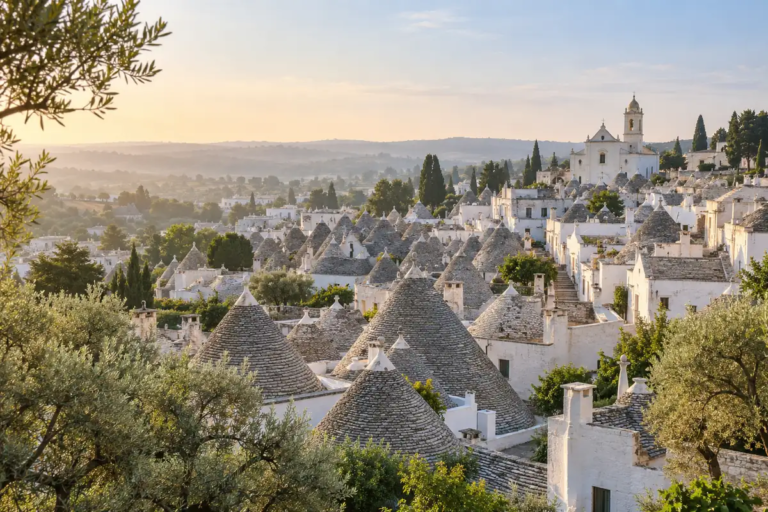
Alberobello sits in the Itria Valley of Puglia, in the heel of Italy’s boot. It is famous for its trulli. These are small whitewashed homes made of local limestone, with cone-shaped stone roofs.
Trulli are built without mortar. Builders stack flat stones in rings, and each ring sits a little further in than the one below. Slowly the rings close into a cone. This dry-stone method is thousands of years old, and it is still used in the region today.
In the town special is that it is not a museum. People still live, cook and hang laundry in these houses.
The numbers show why a quick visit feels rushed. Alberobello has more than 1,500 trulli. About 1,030 stand in the Rione Monti quarter, on one hillside. Another 590 or so are in Aia Piccola, a quieter quarter just across the town center.
You can walk both quarters in a morning. But if you want to step inside a trullo, sit at the Belvedere Santa Lucia viewpoint, and come back again at sunset when the stone turns gold, one day goes fast. Add the food, the olive groves and the villages nearby, and three nights start to make sense.
If you enjoyed our guide to slow travel in Provence, Alberobello offers the same unhurried rhythm, with an Italian accent.
Planning Slow Travel in Alberobello
How Long to Stay
Stay at least three nights. That gives you one day for the town, one for food and olive oil, and one for nearby villages. With five nights, you can settle into a gentle routine: an early walk, a long lunch, a short rest, and a quiet evening stroll.
When to Go
The best months are April to early June and September to October. The weather is mild and the crowds are smaller.
Spring: wildflowers on the roadsides and comfortable walking weather.
September: grape harvest season in the Itria Valley.
October and November: olive harvest time. Many mills press fresh oil, and the first oil of the year tastes green and peppery.
July and August: hot and busy. Walk early and rest in the afternoon.
Winter: very quiet. Some restaurants and guesthouses close for part of the season, so check before you book.
Getting There
The closest airports are Bari and Brindisi. Bari is about 50 km away, which is roughly an hour by car. From Brindisi, plan on a bit more than an hour.
Without a car, you can reach Alberobello from Bari with Ferrovie del Sud Est (FSE). Service is a mix of trains and buses, and some sections of the line run by bus. The trip takes about 1.5 to 2 hours. Timetables change often, and Sunday service is limited, so check the FSE website the week you travel.
A rental car gives you the most freedom. It makes it easy to reach farm stays, olive mills and small villages. Park outside the historic quarters, since the lanes are narrow and mostly for walking.
Where to Stay in Alberobello: Sleeping in a Trullo
Sleeping in a restored trullo is one of the best parts of a visit. The thick stone walls keep rooms cool in summer. The domed ceiling feels calm and cozy, a bit like sleeping inside a quiet shell.
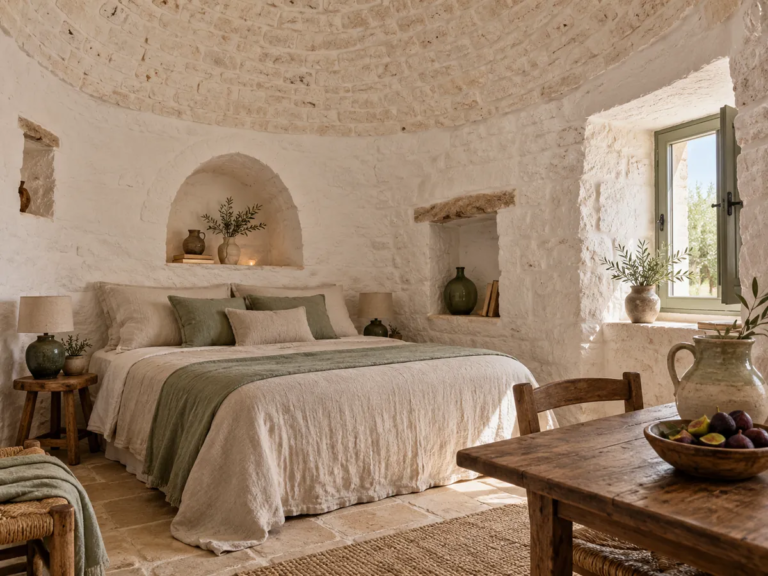
You have two main choices:
| Stay type | Best for | Keep in mind |
|---|---|---|
| Trullo in Rione Monti or Aia Piccola | Walking everywhere, evening strolls, no car needed | Lanes can be busy by day; rooms are often small |
| Masseria in the countryside | Olive groves, silence, pools, farm meals | You will need a car for most outings |
A masseria is an old fortified farmhouse. Many have been turned into guesthouses, and some still make their own olive oil.
Before you book, ask these questions:
Are there steps or uneven floors?
How high is the ceiling at the edges of the room?
Is there air conditioning or a fan for summer?
How big are the windows? Some original trulli are quite dark.
Where can I park, and how far is it to walk with luggage?
These details matter, especially if you have bad knees or travel with older parents. Original trulli have plenty of charm, but not every one suits every traveler.
What to Eat in Alberobello: Traditional Puglian Food
Puglian cooking is simple and seasonal. It is built on vegetables, beans, durum wheat and olive oil. Meat and cheese are there too, but in small amounts. In many ways, it is the Mediterranean diet as people have always eaten it at home.
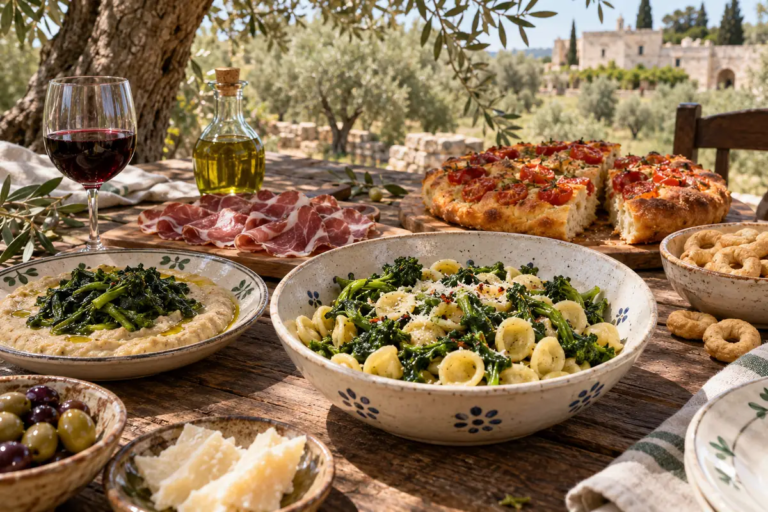
Dishes to Try
Orecchiette con cime di rapa: small ear-shaped pasta with turnip greens, garlic, chili and olive oil. It is the region’s signature dish.
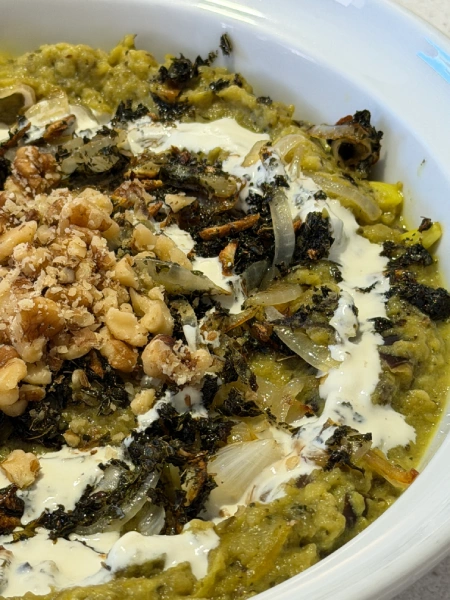
Fave e cicoria: a smooth purée of dried fava beans served with bitter wild chicory. It is a classic peasant dish and fully plant-based. If you like this style of eating, see our guide to the plant-based Mediterranean diet.
Bombette: little rolls of pork filled with cheese and grilled over coals. The best place to try them is a fornello, a butcher shop with a grill. You pick the meat at the counter, they cook it, and you eat at simple tables.
Capocollo di Martina Franca: a cured pork neck from the town next door, sliced thin and eaten with bread.
Focaccia barese and taralli: soft focaccia topped with tomatoes, and crunchy ring-shaped crackers. Both are perfect for a Mediterranean picnic under the olive trees.
Olive Oil and Wine
Puglia makes more olive oil than any other region in Italy. Some of the olive trees along the roads near Alberobello are hundreds of years old.
Book a tasting at a local frantoio (olive mill). You will learn how good extra virgin olive oil should smell and taste: fresh, grassy and a little peppery at the back of the throat. If you want to know why olive oil sits at the center of this way of eating, read our beginner’s guide to healthy fats.
For wine, try the local reds, Primitivo and Negroamaro. Or try a crisp white from Locorotondo, a hill town about 10 minutes away by car.
A Simple 3-Day Slow Travel Plan for Alberobello
This plan leaves plenty of empty time on purpose. Use it as a starting point, not a schedule.
| Day | Morning | Afternoon | Evening |
|---|---|---|---|
| Day 1: The trulli | Walk Rione Monti before 9 a.m., while it is quiet | Visit the Trullo Sovrano, then rest | Sunset at Belvedere Santa Lucia, then dinner in town |
| Day 2: Food and olive oil | Wander Aia Piccola and the morning shops | Olive oil tasting at a frantoio, or a pasta-making class | Grilled bombette at a fornello |
| Day 3: Itria Valley villages | Drive or cycle to Locorotondo | Long lunch in Martina Franca or Cisternino | Back for the evening passeggiata |
Got two more days? Add a farm stay day with no plans at all, and a morning walk on the country lanes between the villages.
Things to Do in Alberobello Like a Local
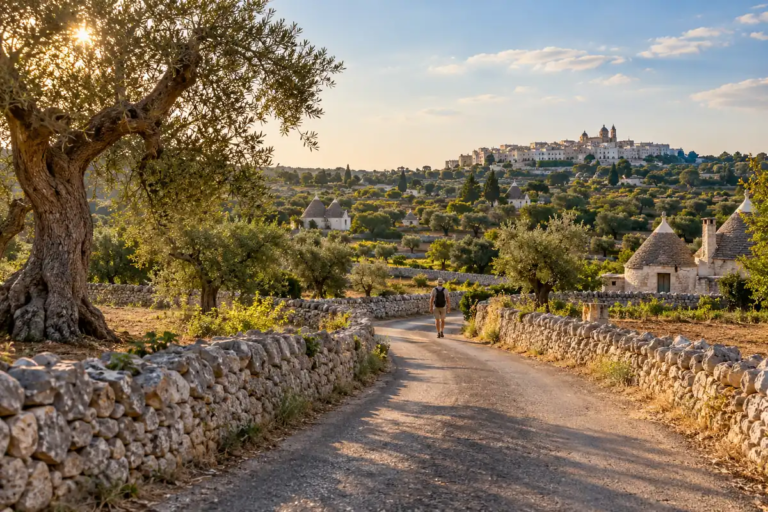
Slow travel is less about seeing everything and more about joining the daily rhythm. Here are some unhurried ways to spend your days:
Walk early. Before 9 a.m., Rione Monti is almost empty and the light is soft. It is the best time for photos too.
Visit the Trullo Sovrano. Built in the 18th century, it is the only two-story trullo in town, with a main dome about 14 meters high. Today it is a small house museum near the Basilica of Saints Cosmas and Damian. Tickets cost just a few euros. It often closes for a midday break, so check the Trullo Sovrano website for current hours.
Step inside the Church of Sant’Antonio. This church was built in the 1920s in trullo style, with its own cone-shaped roof.
Join the passeggiata. In the early evening, locals take a slow walk through town before dinner. Join them. It is one of the simplest ways to feel the community and connection that shapes Mediterranean life.
Take a cooking class. Learn to shape orecchiette by hand with your thumb and a small knife. It is harder than it looks, and a lot of fun.
Walk or cycle between villages. The country lanes pass dry-stone walls, vineyards and old trulli in the fields.
How to Visit Respectfully
Remember that many trulli are private homes. A few simple habits help:
- Keep your voice low in the residential lanes.
- Don’t step into doorways or private gardens for photos.
- Buy from local makers, not mass-made souvenir stands.
- Visit early or late in the day to avoid adding to the midday crowds.
How Slow Travel Supports Everyday Wellbeing
In Alberobello, healthy habits happen without trying. You walk everywhere. Meals are built on vegetables, beans and olive oil. Lunch is long, and nobody rushes you from the table.
These habits sit at the heart of Mediterranean life. Mayo Clinic experts describe the Mediterranean diet as one of the best eating patterns for heart health. They also point out that slowing down and enjoying your food is part of the benefit, not just what is on the plate. You can read more in our post on why the Mediterranean diet is so heart-healthy.
One trip won’t change your health on its own. But it can be a lovely way to practice these habits and bring a few home with you:
A daily walk after meals. Here’s more on the benefits of daily walking.
Eating slowly and without screens, the way we describe in mindful eating the Mediterranean way.
Cooking with what is in season. See our guide to eating with the seasons.
This article is for general information only and is not medical advice. Please talk with your doctor before making big changes to your diet or activity level.
Bring Alberobello Home With You
Alberobello rewards patience. An early walk through silent stone lanes. A plate of fave e cicoria. A glass of Primitivo as the sun sets over the Itria Valley. Book a few nights, eat with the seasons, and leave room in each day for nothing in particular.
The flavors of Puglia don’t have to stay in Italy. Bring them into your kitchen with our Mediterranean recipes, or start with these easy Mediterranean recipes for busy weeknights. Planning your next slow trip? Browse more Mediterranean travel guides.
Frequently Asked Questions
1. Is Alberobello worth more than a day trip?
Yes. A day trip covers the main trulli streets. Staying three nights or more gives you quiet mornings, sunset walks, slow meals, and time for the nearby Itria Valley villages.
2. How many days do you need in Alberobello?
Plan for three nights. Use one day for the town, one for food and olive oil, and one for Locorotondo, Martina Franca or Cisternino. Five nights lets you truly slow down.
3. How many trulli are in Alberobello?
Alberobello has more than 1,500 trulli. About 1,030 are in Rione Monti and about 590 are in Aia Piccola, according to UNESCO.
4. Why are the trulli a UNESCO World Heritage Site?
The trulli are a rare surviving example of dry-stone building, a method thousands of years old. People still live in them today. UNESCO added them to the World Heritage List in 1996.
5. What is the best time to visit Alberobello?
April to early June and September to October. The weather is mild and crowds are smaller. October and November are olive harvest season, which is a special time for food lovers.
6. Can you stay overnight in a trullo?
Yes. Many restored trulli are now guesthouses and vacation rentals. Before you book, ask about steps, ceiling height, windows and air conditioning.
7. What food is Alberobello known for?
Try orecchiette with turnip greens, fava bean purée with chicory, grilled bombette, capocollo di Martina Franca, focaccia and taralli. Finish with local olive oil and a glass of Primitivo.
8. Is Puglian food part of the Mediterranean diet?
Largely, yes. Puglian cooking is based on vegetables, beans, whole grains and olive oil. These are the same foods at the center of the Mediterranean diet.
9. How do you get to Alberobello without a car?
Fly into Bari. Then take a Ferrovie del Sud Est train or bus to Alberobello, which takes about 1.5 to 2 hours. Check the timetable before you go, because schedules and Sunday service change.
10. Which villages near Alberobello are worth visiting?
Locorotondo, Martina Franca and Cisternino are all close by. Each has a whitewashed old town, good local food and countryside views. They make easy half-day trips.